Closing the Gap
Running a compliance gap analysis often feels like paying someone to tell you your roof is leaking, only for them to walk away without handing you a hammer. Finding the gaps is only half the battle. The real work, and the real headache, lies in actually closing them.
Beyond the Diagnosis
Many compliance tools stop at the diagnosis. They compare your enrolled program against a reference standard to identify what is covered, what is missing, and where the two frameworks conflict. They might hand you a list of directly incompatible obligations, such as differing document retention periods.
While identifying these issues is a crucial first step, it leaves the heavy lifting of remediation entirely on your shoulders.
A modern compliance platform needs to move beyond just pointing out the problems; it needs to actively help you solve them.
From Finding to Fixing
When onboarding a new program, it is completely normal to discover gaps or conflicts with a parent program or legislation. Instead of merely highlighting that an issue exists, effective tools should provide a seamless path to update the source requirements so they become compliant.
Here is what an actionable gap analysis process looks like:
-
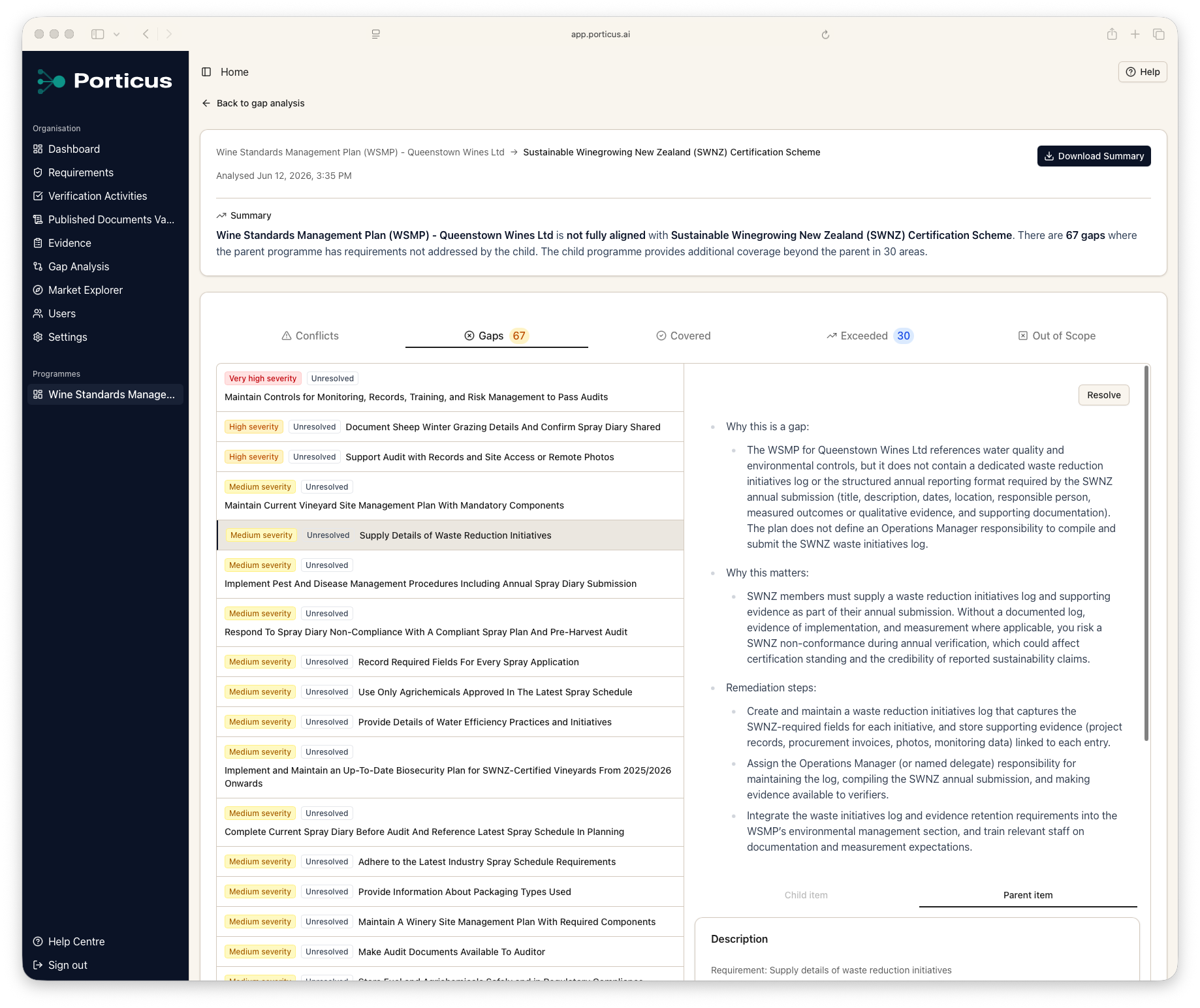
Intelligent Triage: The system should clearly categorize findings into direct conflicts, missing gaps, or areas where you already meet or exceed the requirements.
-
Contextual Understanding: It helps to know exactly why an AI classified a finding the way it did, complete with side-by-side comparisons of your program and the reference standard.
-
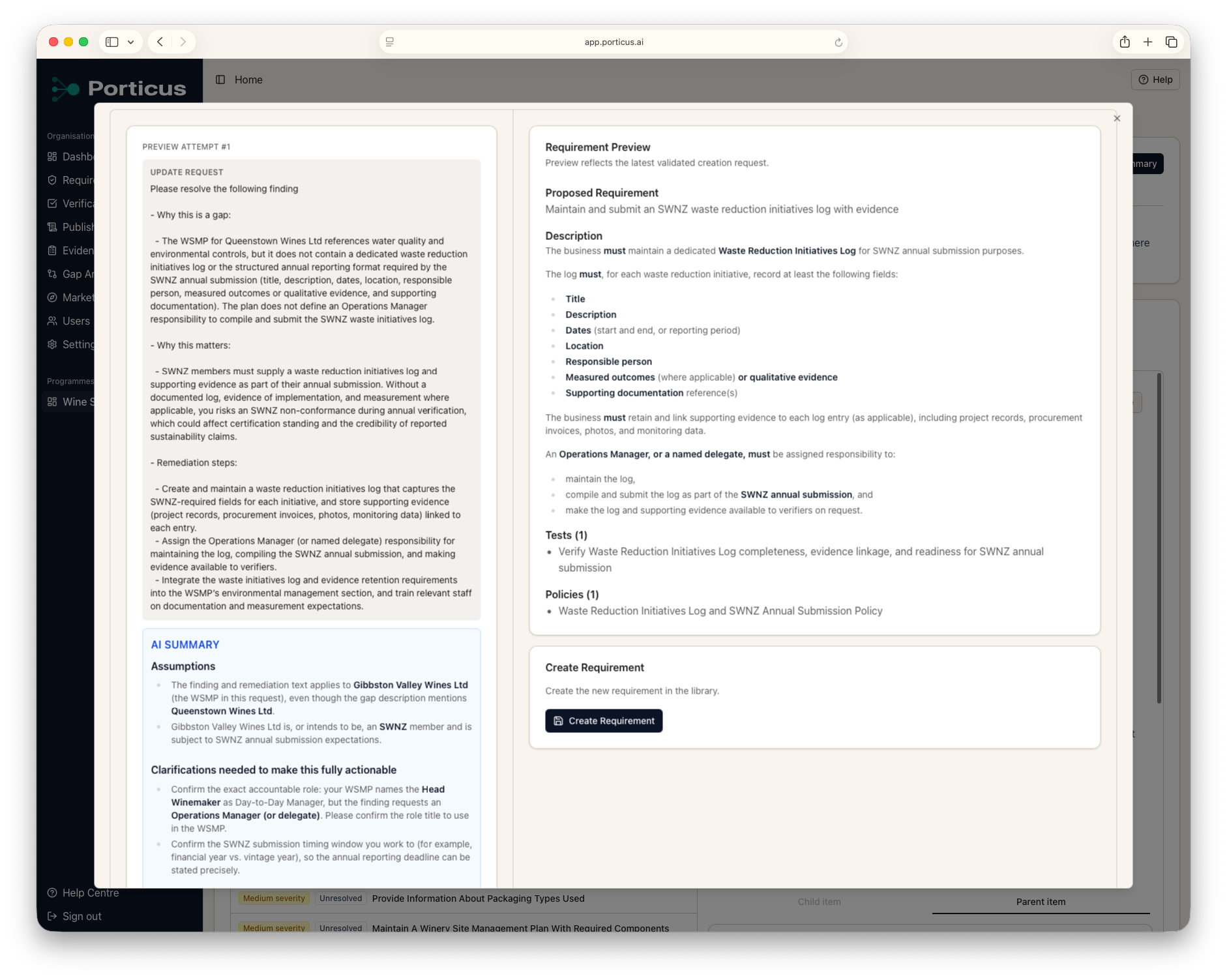
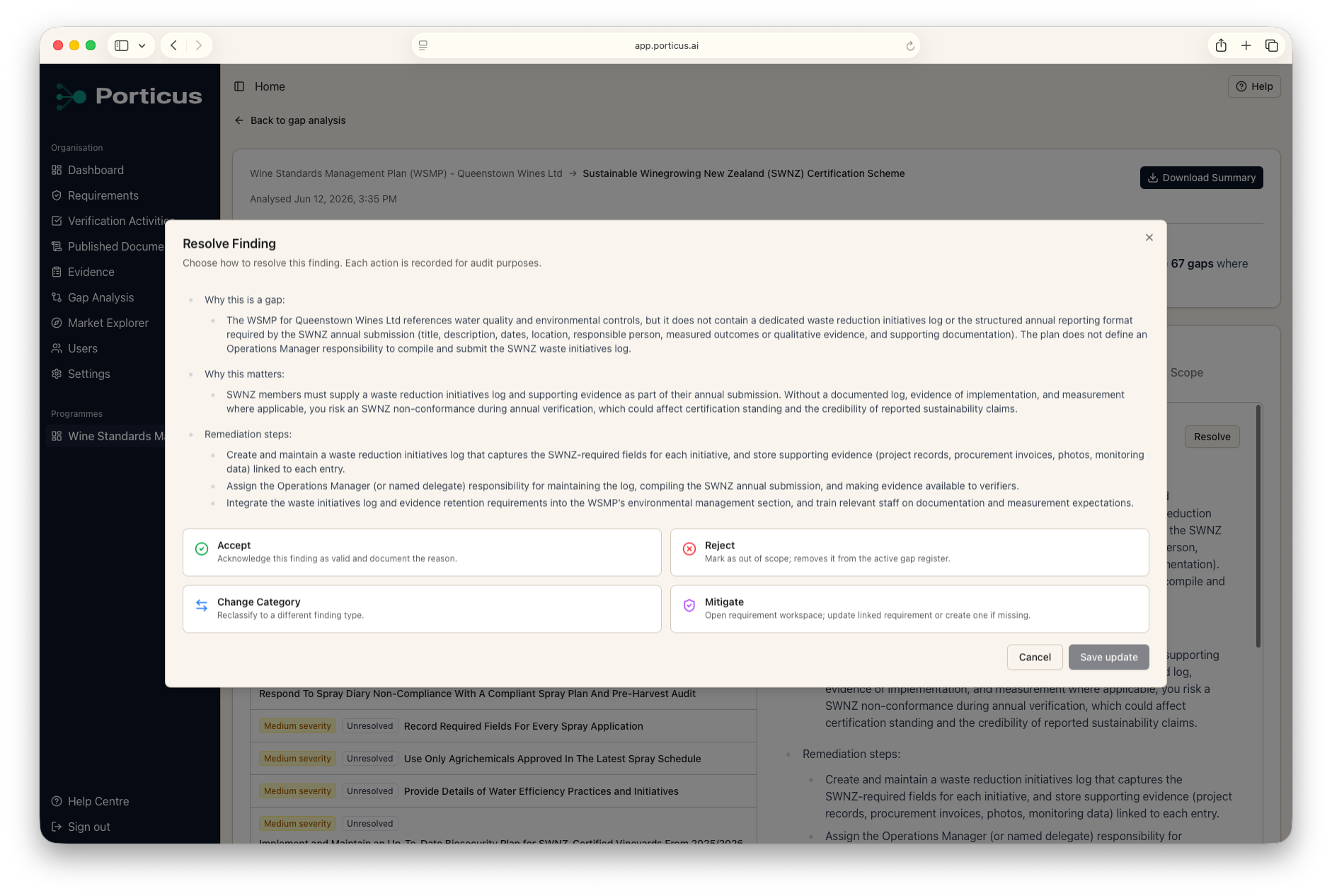
Assisted Mitigation: When a finding represents a genuine gap, you should be able to immediately update or create a compliance control to close it.
-
AI as a Drafting Partner: AI should act as an assistant to accelerate the creation of clear requirement text, while suggesting linked verification activities and published documents.
Actionable Compliance
Whether you need to adjust thresholds on an existing requirement to resolve a conflict, or draft a brand new library entry to close a complete gap, the workflow should be continuous.
By integrating the mitigation process directly into the gap analysis results, you can repeat the triage and mitigate cycle in waves. Over multiple iterations, this refines your requirements and activities, steadily reducing your unresolved count.
Ultimately, knowing your gaps isn't compliance. Closing them is.